























This week, past and present players will gather at an inner-city Jakarta ballroom to mark the 30 year anniversary of the city’s local AFL footy club.
It’s an unlikely occasion for a club that began randomly, evolved consistently, declined covidly and rebooted recently in the humid urban jungle of the city known affectionately as the “Big Durian”.
Whilst the club’s curious motto “perpetuate the myth” was likely conceived in a Senopati bar, three decades riding the Indonesian rollercoaster have certainly done nothing to warrant changing it.
Formed by a ragtag assortment of Australian diplomats, teachers and business imports, the Bintangs (Stars) had their genesis in Asia’s boom times of the mid-90s.
The 1997 Asian financial crisis that followed pre-empted a cascading wave of disruption that saw the country reject Suharto’s military rule in favour of a fledgling democracy. The elongated reformasi period was sometimes brutal and included a revolving door of Presidential aspirants, the rise of sectarian violence and a push for Timorese independence.
Perversely, the city’s fledgling AFL club began to flourish in spite of the chaos of the krismon era as the Australian expatriate community sought ways to maintain sanity, fitness and connection.
Key to that early rise was finding an opponent, a playing strip, an oval and some seed funding.
The club didn’t have to look far to find its original nemesis with the serendipitously timed formation of the Bali Geckos. The bronzed surfing elite from the Isle of the Gods taking the capital’s pasty professionals made for an enduring and occasionally bitter rivalry that has punched through three decades.
In an early fixture at a makeshift kampung field outside of Kuta, yaks and chooks wandered past surveying the madness of a bunch of sunburnt bules waging a ferocious battle to win over a prized Sherrin. The kampung elder loved the spectacle so much that, through broken English, he invited the teams back to fight in his village again the next year.
Jakarta’s initial selection of a fully woolen Essendon jersey proved to be a shocker with players copping heat stroke and then itching incessantly for days after a game. A new lightweight version was introduced soon after, the cherished star design rustled up by Pak Sofian, a junior staffer from the mining office of the club’s secretary.
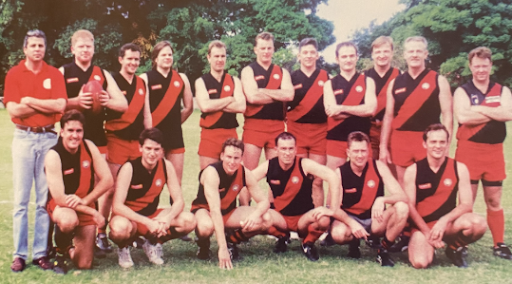
Bali 1998
The team trained on Sunday afternoons at Cibubur, a converted cricket field of sorts on Jakarta’s southern fringe. Its near impossible location at the back of a sprawling Scout complex meant local players and visiting team buses would often find themselves lost and driving in circles, usually after many years of attending the same venue.
The Kangaroos club song was adopted following an early home victory, its major appeal being that it required a single word change and it was too hot to think of anything else in the moment.
The club found its mojo in 1998 when its foundation committee led by Tim Hakfoort went “chips-in” and moved the AFL Grand Final telecast away from the pubs and into a palatial Jakarta ballroom. Modelled on the North Melbourne panel format breakfast, AFL players and some regional ABC TV hosts were flown up to be greeted by an enthusiastic 400 guests at the sold-out Regent Hotel.
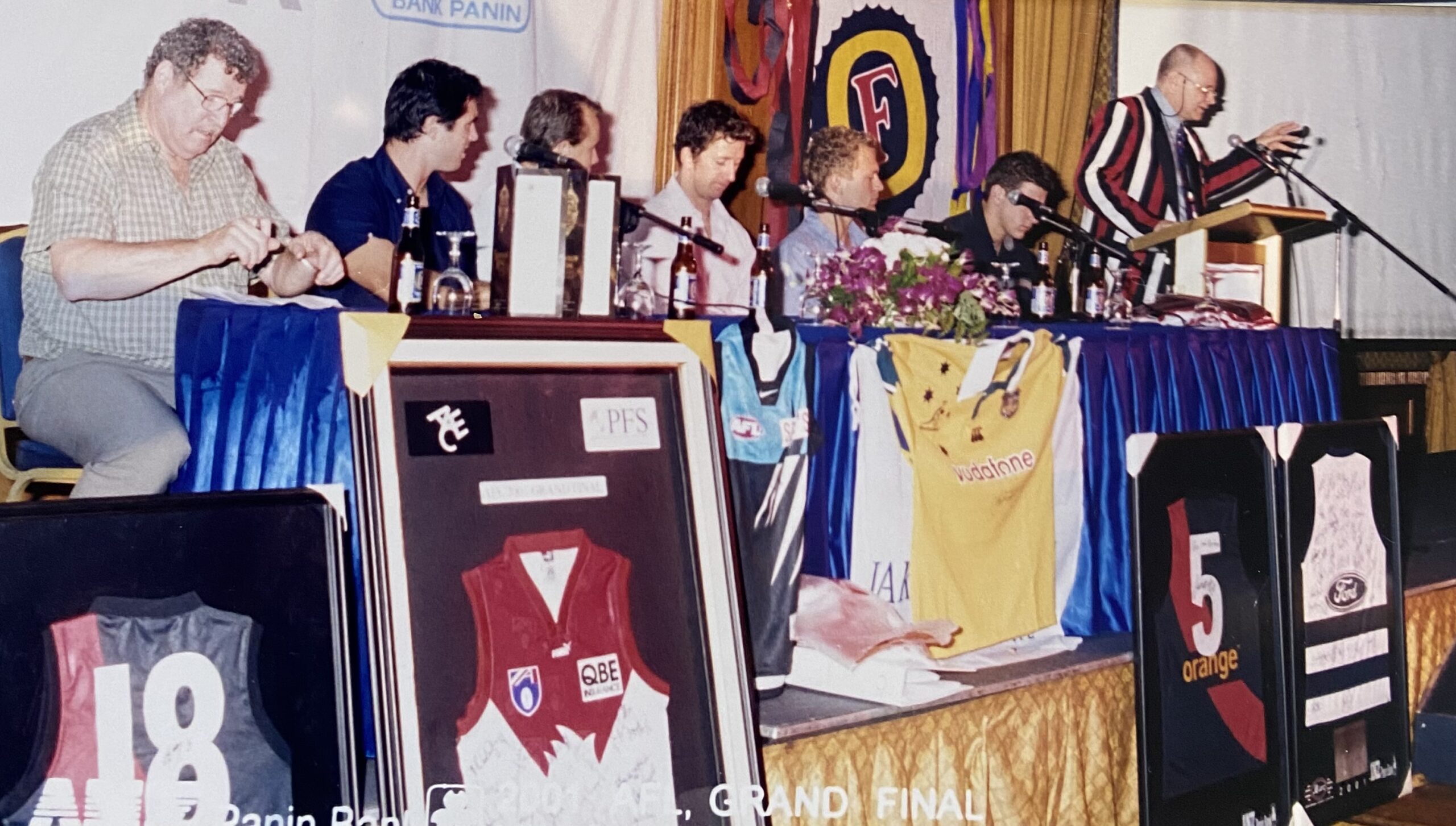
Cowboy Neale joins AFL Stars on stage 2001
With word getting out and sponsors clambering to join the action, an annual pilgrimage to locate a larger ballroom ensued. Numbers peaked at 700 at the Shangri La in 2002 before a rise in insidious religious tensions started to chip away at confidence and expatriate numbers.
With cruel timing and crueller intent, the first Marriott bomb rocked the city only days before the 2003 function. Twelve months on from the first Bali blasts, western hotels were suddenly places to be avoided for an increasingly jittery community. The committee faced a terrible moral and financial quandary until a forward-flanker with local connections quietly intervened to have the hotel militarily reinforced. Punters could enjoy the game from arguably the safest place in the country that day.
Over the years more than 50 serving AFL players and celebrities have participated in those Grand Final weekends with an alumni list that includes 3 senior coaches from the 2025 AFL finals.
The financial success of the functions set the club up for its annual football program which assisted with the club being able to enter regional tournaments in cities as far flung as Tokyo, Saigon and Hong Kong.
In concert, a significant allocation of funding was directed towards ANZA (the Australia and New Zealand Association) to work together on targeted social programs.
A donation of 16000 food parcels to Ambon, the focus of the 1999 Maluku sectarian conflict was one of the more unlikely aid arrangements of the time and a program supporting cleft pallet reconstruction surgery for underprivileged kids followed the year after.
As the team improved and began winning regional fixtures, an understated and self- effacing culture kept the mood breezy.
Four of the team’s fluent Bahasa speakers entered Family Seratus, the Indonesian version of Family Feud only to be comfortably towelled up by a bewildered local family. Much later, a similar sense of bemusement greeted an attempt to stage a Grand Final parade around the city’s main Donny and Marie roundabout.
In 2000, the club hosted the inaugural Asian Championships with Singapore, Hong -Kong, Brunei and Thailand joining the fray. With a national format pre-agreed, a combined Indonesia outfit upset Hong Kong in the tournament final and repeated their success on Sentosa, Singapore in 2002 against the tournament hosts. Joining forces with their Bali frenemy for one weekend each year was a worthwhile compromise to dismantle the expat heavy powerhouses of Asia.
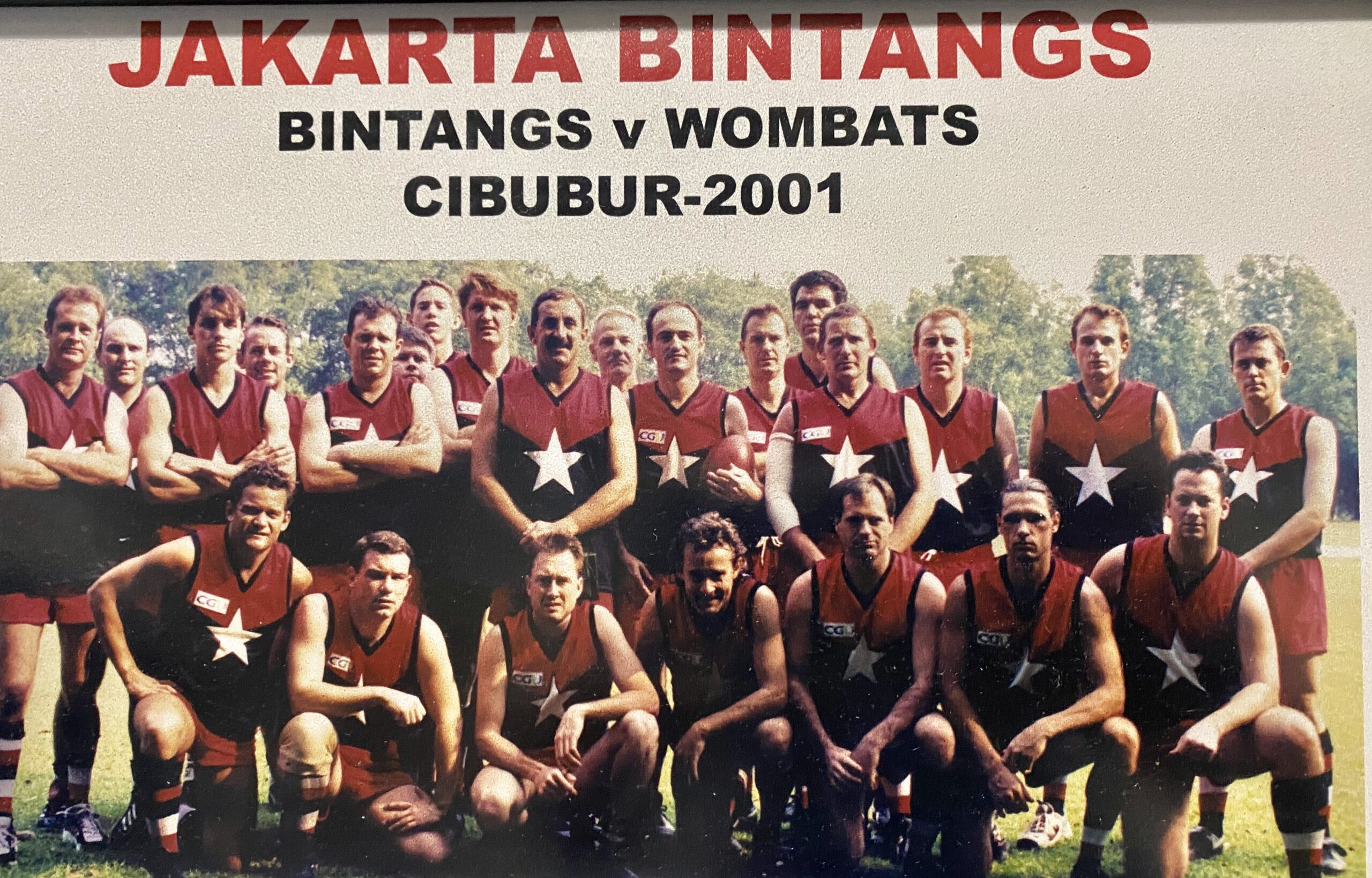
New jumpers v Singapore 2001
A focus on local development commenced around that time on the back of the charitable grunt work of Kiwi inpat Robert Baldwin and the club’s first Indonesian player Andi Dyah. Makassar born and Collingwood devoted, Andi began training players from orphanages in Jakarta’s impoverished Depok area which morphed into a fledgling local league.
In 2005, the club applied for an AUSAID grant to fund a full-time development coach from Australia. The benefits of that simple sporting diplomacy were on display in 2014 when an All-Indonesian squad jetted to the AFL’s International Cup in Melbourne. It remains a source of pride that the squad included players from Andi’s initial Depok orphanages who had found purpose and possibility through footy.
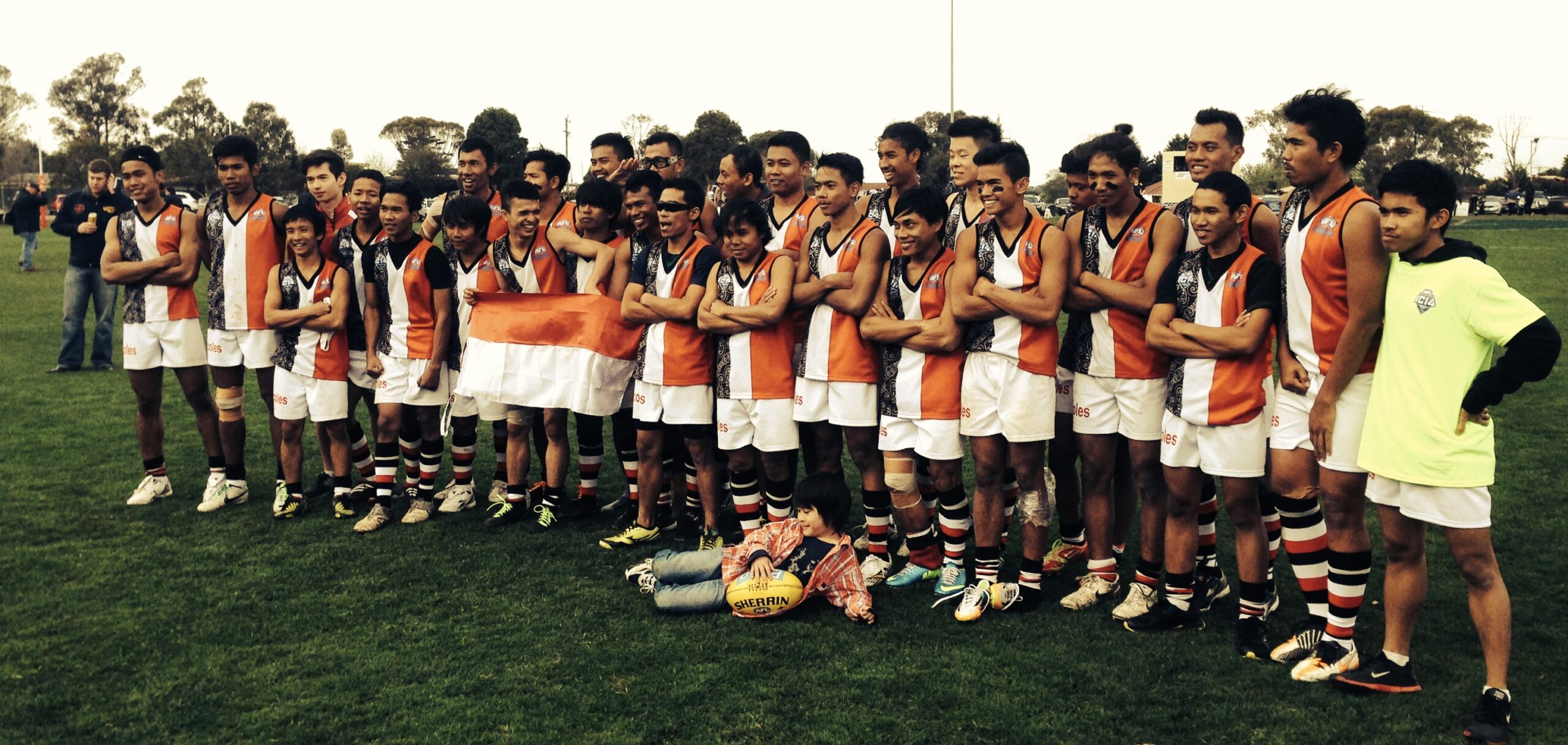
International Cup Melbourne 2014
The Bintangs have remained first and foremost about participation, with hundreds of players pulling on the white star jersey over the years. A team-sheet on any given day may have combined a retired West Coast Eagle, Canadian popcorn entrepreneur and an SAS commando.
Club members have dealt directly and indirectly with all manner of natural and man-made tragedies that have defined the course of its plucky and respected host nation. After losing teammates and friends to terrorism in both Bali and Jakarta, the club welcomed AFP members into its playing ranks during the long and successful quest to round up the perpetrators. The weekly cadence of training has proven to be a sanctuary for anyone needing a blow-out and a beer.
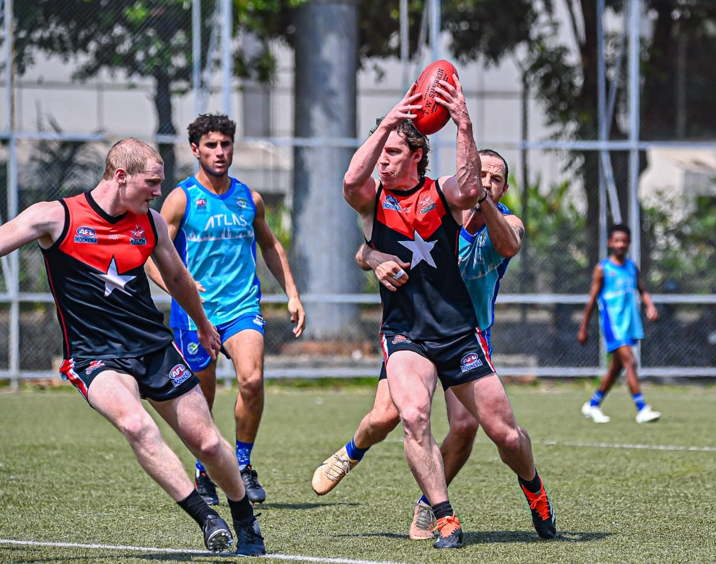
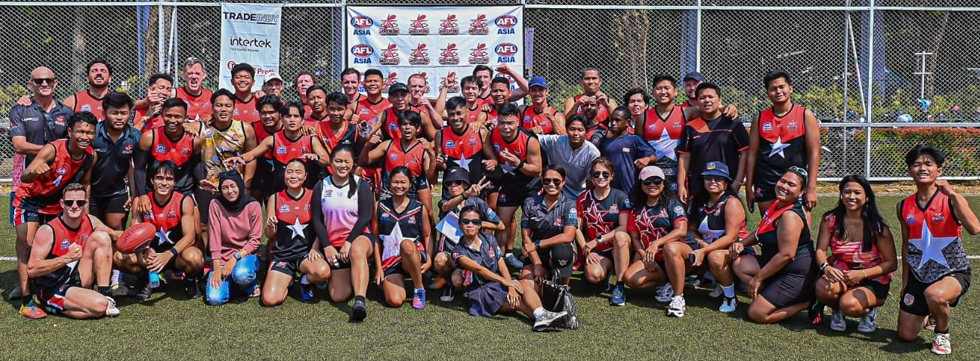
Jakarta v Bali 2025
Today the club has re-emerged strongly after a dormant Covid period that saw expatriate numbers decimated. Forever evolving, the local league is now dominated by Indonesian nationals and the women’s program has energised the club in a country not known for its female sporting participation.
Earlier this month at the 2025 Asian Championships in Thailand, Indonesia travelled with a sizeable squad comprising two mens and a womens team. Players were drawn from clubs across Jakarta, Bali and Borneo.
Whilst they missed the silverware this year, it was a moment to take breath and reflect on the resilience of a footy club that continues to defy the odds.
So let’s join in the chorus and perpetuate the myth.
JBAFC 2025
2025 photos courtesy of AGFASPORT
Dedicated to the memory of past players Greggy, Kenny, Scottie, Craig, Lofty and Wally.
Rob Spurr represented the JBAFC from 1998 to 2004.